Overview
Short answer: the right tea gift set depends mainly on how well you know the recipient's existing tea habits. A sampler set covering several tea styles is the safer choice when you're not sure what they usually drink, while a set focused on one tea style or origin works better once you already know their preference.
Tea gift sets are a popular, broadly appealing gift because tea itself has a long shelf life, ships easily, and appeals to a wide range of recipients. But "tea gift set" covers a lot of ground -- from simple sampler boxes to elaborate sets that include a teapot, infuser, and cups -- so it helps to think through what kind of set actually fits the person you're buying for.
This guide walks through the main types of tea gift sets, how to match one to the recipient, and what to check on the actual Amazon listing before ordering.
It's also worth remembering that tea preference is often more specific than people expect -- someone who drinks tea daily may have strong opinions about caffeine level, brewing method, or specific tea styles, even if they've never explicitly told you. Paying attention to small clues, like whether they use loose-leaf tea or bags, or whether they favor herbal blends over caffeinated tea, can meaningfully improve the fit of a gift set.
Tea gift sets also work well across a wide range of occasions -- a small sampler suits a casual thank-you gift, while a more elaborate accessory-inclusive set can anchor a bigger occasion like a housewarming or a milestone birthday. Because the format scales so easily by both size and price, it's one of the more flexible gift categories to shop for once you understand the basic building blocks covered in this guide.
What to know before you buy
Start with caffeine preference. Some tea drinkers stick to caffeinated black or green teas, while others prefer herbal or decaffeinated blends, especially for evening drinking. A set that mixes both caffeinated and herbal options is a reasonably safe default if you're unsure.
Consider brewing method. Someone who already owns a teapot or infuser may appreciate loose-leaf tea more than bagged tea, while someone without dedicated tea equipment may find bagged tea more convenient. If you're gifting loose-leaf tea to someone without an infuser, consider including one in the set.
Think about flavor intensity too -- some tea drinkers prefer strong, bold flavors, while others prefer lighter, more delicate blends. A sampler set naturally hedges against this uncertainty by including a range of intensities rather than committing to one.
Finally, consider whether the recipient drinks tea primarily for the ritual (a calming afternoon routine) or primarily for the caffeine (a coffee alternative). This distinction can point you toward a more ceremonial set with a teapot and cup, versus a simpler, more functional sampler.
It's also worth thinking about how the recipient likes to drink tea day to day -- at a desk during a workday, as part of a slower weekend routine, or shared with guests. Someone who mostly drinks tea at a desk may get more use out of a simple, fast-brewing bagged set, while someone with a slower home routine may appreciate the extra step of loose-leaf tea and a proper infuser.
Types of tea gift sets
Sampler sets. These include a small amount of several different tea styles, letting the recipient try a range without committing to a large quantity of any one type. This is generally the safest choice when you don't know the recipient's specific preferences well.
Single-origin or single-style sets. These focus on one specific tea style or growing region, and work best once you already know the recipient enjoys that particular style -- for example, a set focused entirely on green tea for someone who has mentioned preferring it.
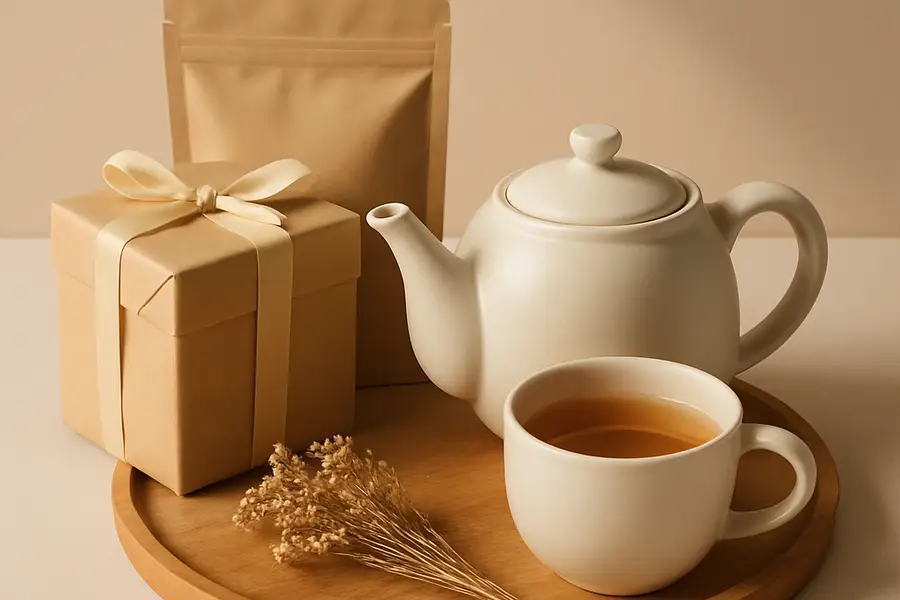
Accessory-inclusive sets. These pair tea with brewing equipment, like an infuser or a small teapot, and work well as a more complete gift for someone getting more seriously into tea as a hobby, or someone who doesn't yet own dedicated tea equipment.
Wellness or evening-focused sets. These lean toward herbal, caffeine-free blends marketed around relaxation or an evening routine, and can be a nice option for someone who wants to wind down with tea rather than use it as a caffeine source. Avoid reading too much into any specific wellness claims on these listings -- treat them as flavor and ingredient descriptions rather than health claims.
See our tea and coffee gifts hub for more on matching a set to the recipient, and our coffee lover gift basket guide if you're choosing between tea and coffee as the gifting theme.
Regional or specialty tea sets. Some sets focus on a specific regional tea tradition or a specialty preparation style. These can make a memorable gift for a recipient who already enjoys tea broadly and is looking to explore something more specific, though they're a riskier choice for someone whose preferences you don't know well yet.
Browse our recommended products
Our featured picks refresh periodically. While we update them, our editorial guides can help you find the right gift.
See our guidesWhat to check before buying
Always check the ingredient list for any tea blend, especially herbal or flavored varieties, since some contain added ingredients the recipient may want to know about. Confirm caffeine content directly on the listing rather than assuming from the tea's name or color.
Check the packaging format -- loose-leaf, bagged, or pyramid sachets -- and confirm the recipient has (or the set includes) the right equipment to brew it. A beautiful loose-leaf blend is much less useful to someone without an infuser.
For sets that include a teapot or cup, check material and dishwasher-safety details, since some decorative teaware requires hand washing only.
It's also worth checking the seller's stated shelf life or best-by guidance for the specific blends included, particularly for herbal or fruit-based blends, which can have a shorter shelf life than plain black or green tea. If the set is intended as a keepsake alongside the tea itself, confirm which parts are meant to be consumed and which are meant to be kept.
Mistakes to avoid
The most common mistake is choosing a set based on packaging alone. An attractively boxed set with mediocre tea inside is a weaker gift than a plainer box with genuinely good tea, so look past the presentation to the actual product details.
A second mistake is ignoring caffeine sensitivity. If you know the recipient avoids caffeine in the evening, don't default to a caffeinated set just because it's more commonly available.
Finally, avoid over-committing to a single flavor profile you're not confident the recipient will enjoy. When in doubt, a sampler set spreads the risk across several options instead of betting everything on one.
Another mistake is treating a tea set as an interchangeable stand-in for a coffee gift, or vice versa. Tea and coffee drinkers often have a strong preference for one over the other, and a gift built around the wrong beverage can feel like it misses the recipient's actual daily habit, even if the overall gesture is appreciated.
Final thoughts
A good tea gift set starts with an honest assessment of how well you know the recipient's tea habits -- caffeine preference, brewing method, and flavor intensity all matter more than the box it comes in. When in doubt, a sampler set is the safer default, while a more specific set works well once you know their preferences.
For more beverage gift ideas, see our tea and coffee gifts hub, or browse our full guides index for more specific gifting guides.